Back to news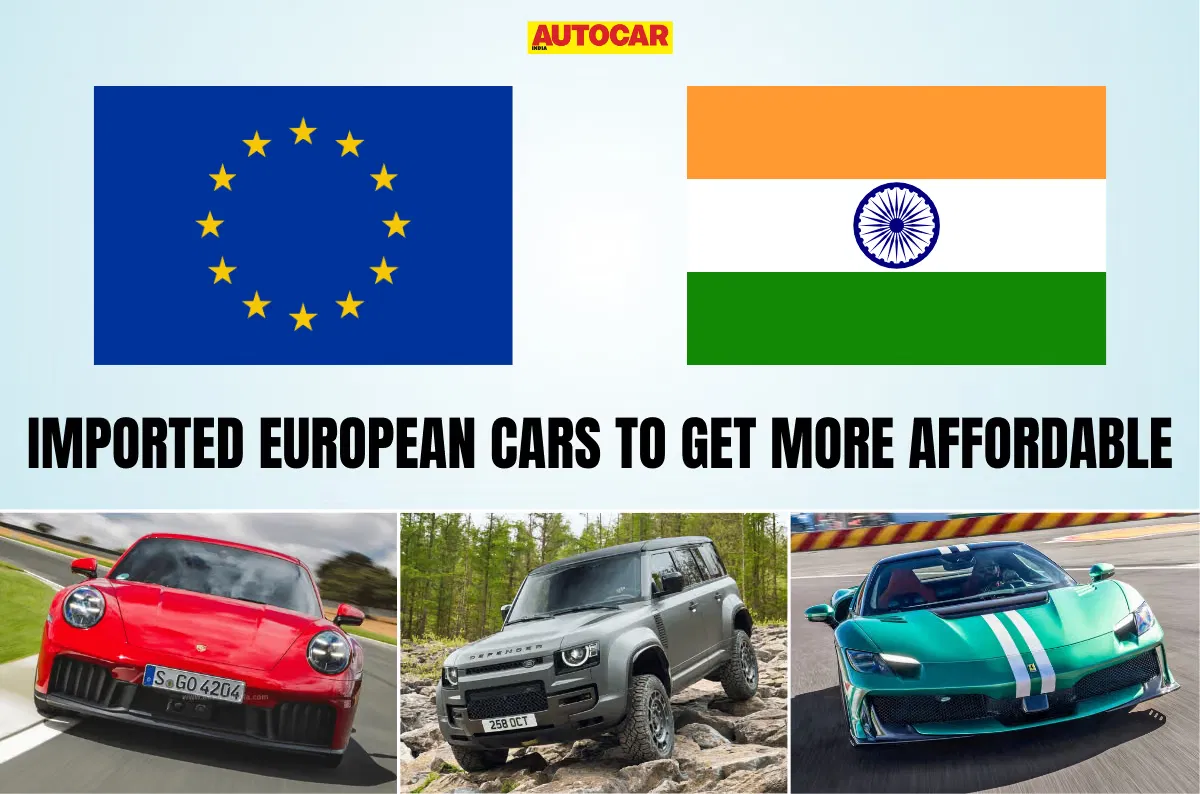
The Indian automotive landscape is poised for a significant transformation with the impending India-EU Free Trade Agreement (FTA). Once this crucial trade pact is signed and implemented, it is expected to open new avenues for European car manufacturers to introduce a wider range of vehicles into the Indian market. A key provision of this agreement will permit European carmakers to import a substantial volume of 100,000 completely built-up (CBU) vehicles into India at significantly reduced import duties during the initial year of the FTA's enforcement.
This specific quota applies to internal combustion engine (ICE) vehicles and non-plug-in hybrid models, indicating a focus on conventional and mild-hybrid powertrains. The allowance for CBU imports at concessional tariffs marks a notable shift from the current high import duty structure, which typically makes fully imported vehicles prohibitively expensive for a mass market. By lowering these barriers, the FTA aims to make European-made cars more accessible and competitively priced for Indian consumers, potentially expanding the premium and luxury segments.
For Indian buyers, this development could translate into a broader selection of European models that are currently either unavailable or priced out of reach due to high taxes. European brands, renowned for their engineering, safety, and luxury, might leverage this opportunity to introduce niche models, performance variants, or even entry-level premium offerings that were previously unviable for direct import. This influx of new options could intensify competition within the premium segment, potentially benefiting consumers through more aggressive pricing strategies and feature-rich offerings from both European and other international brands.
European car manufacturers stand to gain considerably from this agreement. The ability to import 100,000 units at lower duties provides a valuable window to test market demand for specific models without the immediate, substantial investment required for local assembly or manufacturing. This flexibility could encourage brands to bring in models that might not justify full localization but could find a dedicated customer base in India. It also allows them to quickly respond to evolving market trends and consumer preferences with a diverse portfolio of imported vehicles.
In essence, the India-EU FTA is set to reshape the dynamics of vehicle imports in India, particularly for European brands. While the initial quota is for the first year, its implementation could lay the groundwork for a more integrated and diverse automotive market. This strategic move is expected to not only provide Indian consumers with more choices but also foster a more competitive environment, pushing manufacturers to innovate and offer greater value across various segments.
News
India-EU FTA Set to Open Doors for 1 Lakh European Car Imports with Lower Tariffs
via Autocar India
Published 13 September 2026Updated 14 September 20263 min read
The impending India-EU Free Trade Agreement is poised to significantly alter the Indian automotive landscape. It will permit European manufacturers to import 100,000 completely built-up (CBU) ICE and non-plug-in hybrid vehicles at concessional duties in the first year, potentially broadening consume
Originally reported by Autocar India.