Back to news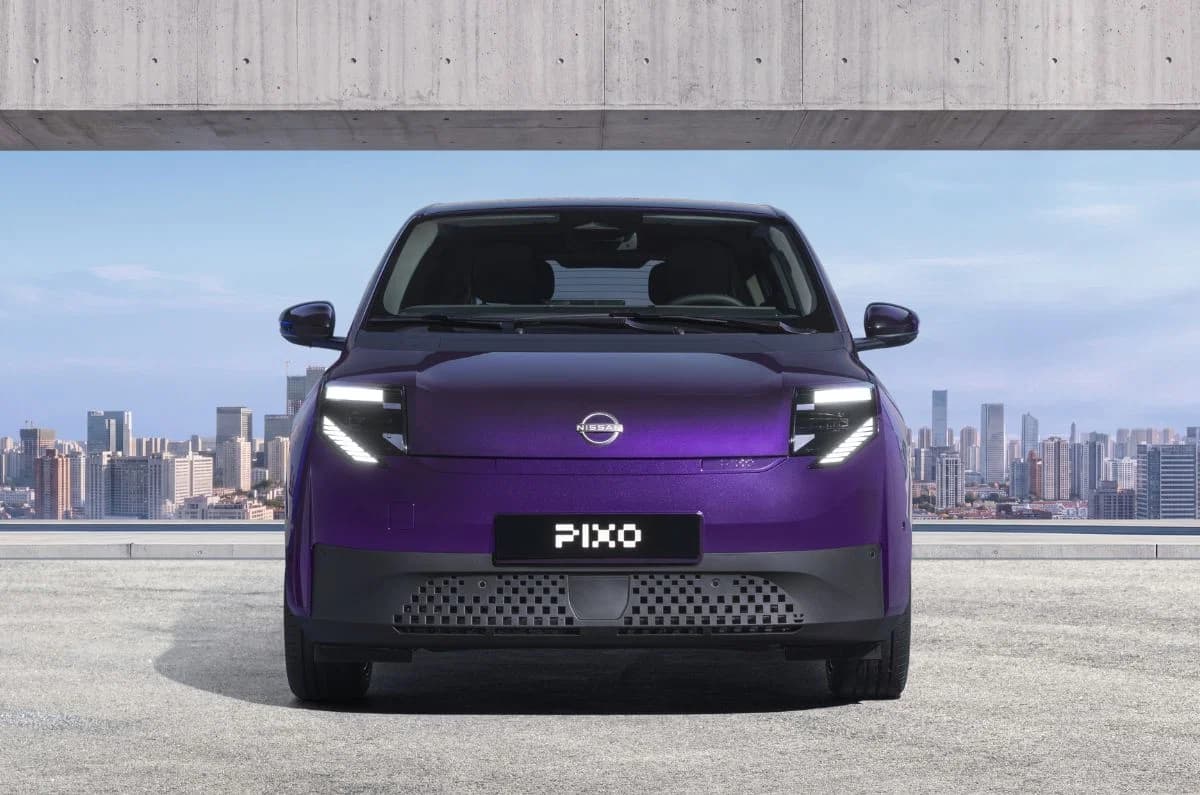
Nissan has recently unveiled the Pixo, an all-electric vehicle designed specifically for the A-segment. While initially revealed for the European market, this new urban-focused EV from the Japanese automaker presents an interesting prospect, particularly given the burgeoning electric vehicle landscape in India. The Pixo is positioned as a compact solution for city dwellers, emphasizing efficiency and practicality, and boasts a claimed range of up to 259 kilometres on a single charge, according to reports. This development signals Nissan's continued commitment to electrification, with potential implications for its future product strategy in various global markets, including India.
The Pixo's debut in Europe highlights its primary role as a dedicated urban commuter. Nissan has designed this A-segment EV to cater to the specific needs of city buyers, where compact dimensions, ease of manoeuvrability, and zero-emission powertrains are increasingly valued. The vehicle is a result of a collaborative effort between Nissan Design Europe (NDE) and its alliance partner, Renault, leveraging shared expertise and resources. Production of the Pixo is reportedly taking place at Renault's Novo facility, underscoring the strategic partnership in bringing this new electric model to fruition. The stated range of up to 259km positions it as a capable option for daily urban commutes and occasional longer trips within city limits.
Despite its European market focus, the introduction of an A-segment electric vehicle like the Nissan Pixo holds significant relevance for the Indian automotive sector. India's EV market is rapidly expanding, with a strong demand for affordable and practical electric cars, especially in the compact segments. An A-segment EV, by its very nature, aligns well with the preferences of many Indian urban buyers who seek compact dimensions for navigating congested city streets and easier parking. While there is no official confirmation regarding the Pixo's launch in India, its existence demonstrates Nissan's capability in developing such vehicles, which could potentially be adapted or inspire future models for the Indian subcontinent.
The Indian market has shown a clear inclination towards compact and value-for-money electric vehicles. The A-segment, in particular, is a crucial battleground for manufacturers looking to capture a significant share of the mass-market EV space. An electric vehicle designed for urban use, offering a decent range and compact footprint, could find a receptive audience among Indian consumers looking to transition to electric mobility without a substantial upfront investment. The focus on urban buyers and a practical range makes the Pixo's concept highly pertinent to India's evolving EV ecosystem, where charging infrastructure is still developing, and daily commutes often involve shorter distances within city limits.
The reveal of the Nissan Pixo in Europe, therefore, serves as an important indicator of the brand's global EV strategy. While specific details for an Indian market entry remain speculative, the underlying principles of an urban-focused, A-segment electric vehicle are undeniably attractive for a market like India. As the country continues its push towards electrification, models that combine practicality, efficiency, and an accessible electric driving experience are likely to gain traction. Nissan's collaboration with Renault on this project also suggests potential for platform sharing and cost efficiencies, which could be beneficial if a similar product were ever considered for localization in India, catering to the unique demands of Indian consumers.
News
Nissan Unveils Pixo A-Segment EV for Europe, Implications for India
via Autocar India
Published 24 September 2026Updated 25 September 20263 min read
Nissan has revealed the Pixo, an A-segment electric vehicle designed for urban buyers in Europe, offering up to 259km range. While initially for Europe, this compact EV's concept holds significant relevance for India's growing electric car market, hinting at potential future strategies.
Originally reported by Autocar India.