Back to news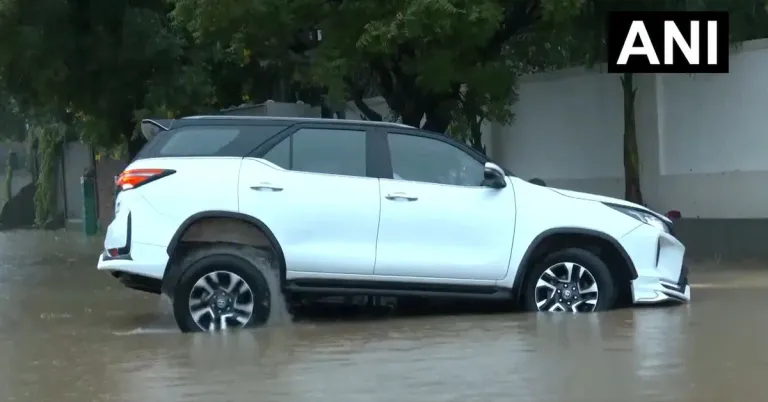
A recent incident in India has brought attention to the challenges faced by vehicles during the monsoon season. A Toyota Fortuner, a popular SUV known for its robust build, reportedly became stuck in a pit following heavy rainfall. The event, documented by CarToq, underscores the unpredictable nature of road conditions, particularly in areas prone to waterlogging and sudden infrastructure damage. This occurrence serves as a reminder for drivers across the country about the importance of vehicle capabilities when navigating adverse weather.
India's monsoon season frequently presents significant driving challenges, with heavy downpours leading to waterlogged streets, reduced visibility, and sometimes, unexpected hazards like open pits or eroded road surfaces. Even in urban centres, drainage systems can be overwhelmed, transforming familiar routes into treacherous paths. Such conditions often test the limits of even the most capable vehicles, highlighting the need for drivers to exercise caution and for vehicles to possess features that enhance safety and mobility in difficult situations.
The Toyota Fortuner holds a strong reputation in the Indian market as a durable and capable SUV, often chosen by buyers seeking a vehicle that can handle varied terrains and demanding conditions. Its commanding presence and perceived reliability make it a preferred choice for many. However, the incident involving the Fortuner getting trapped in a pit after heavy rains suggests that even vehicles with a strong off-road pedigree can encounter situations where specific features become critical for extrication or prevention. This particular event, as highlighted by the source, implicitly points towards the utility of advanced drivetrain systems.
The situation brings into focus the discussion around four-wheel-drive (4x4) systems. While not all Fortuner variants come equipped with 4x4, those that do offer enhanced traction and control, particularly beneficial on slippery surfaces, uneven terrain, or when navigating through waterlogged areas. A 4x4 system distributes power to all four wheels, significantly improving grip and the vehicle's ability to pull itself out of challenging spots where a two-wheel-drive vehicle might struggle. For Indian buyers who frequently encounter diverse road conditions, from well-paved highways to unpaved rural roads and monsoon-affected urban landscapes, the presence of such a system can be a crucial factor in ensuring mobility and safety.
This incident, while specific to one vehicle, offers a broader lesson for the Indian automotive landscape. It reinforces the idea that while a vehicle's overall robustness is important, specific features like a capable 4x4 system can be invaluable when faced with extreme environmental challenges. For prospective SUV owners in India, understanding the capabilities and limitations of their chosen vehicle, especially concerning its drivetrain, becomes paramount. The event serves as a practical illustration of why considering a vehicle's full suite of features, beyond just its size and brand image, is essential for navigating the unpredictable conditions often encountered on Indian roads. 


News
Toyota Fortuner Incident Highlights Monsoon Driving Challenges in India
via CarToq
Published 18 September 2026Updated 20 September 20263 min read
A Toyota Fortuner recently got stuck in a pit after heavy rainfall in India, an incident that underscores the severe challenges posed by monsoon conditions and the importance of vehicle capabilities for Indian drivers.
Originally reported by CarToq.
Related cars on DriveQ
Related reading
News
Mahindra XUV 3XO Lineup Expands with New REVX Variants, Panoramic Sunroof Now More Accessible
News
Toyota's Latest 7-Seater SUV Sparks Interest for Indian Market
News
Hyundai's New Bayon-Based SUV Spotted Ahead of October Launch in India
News