Back to news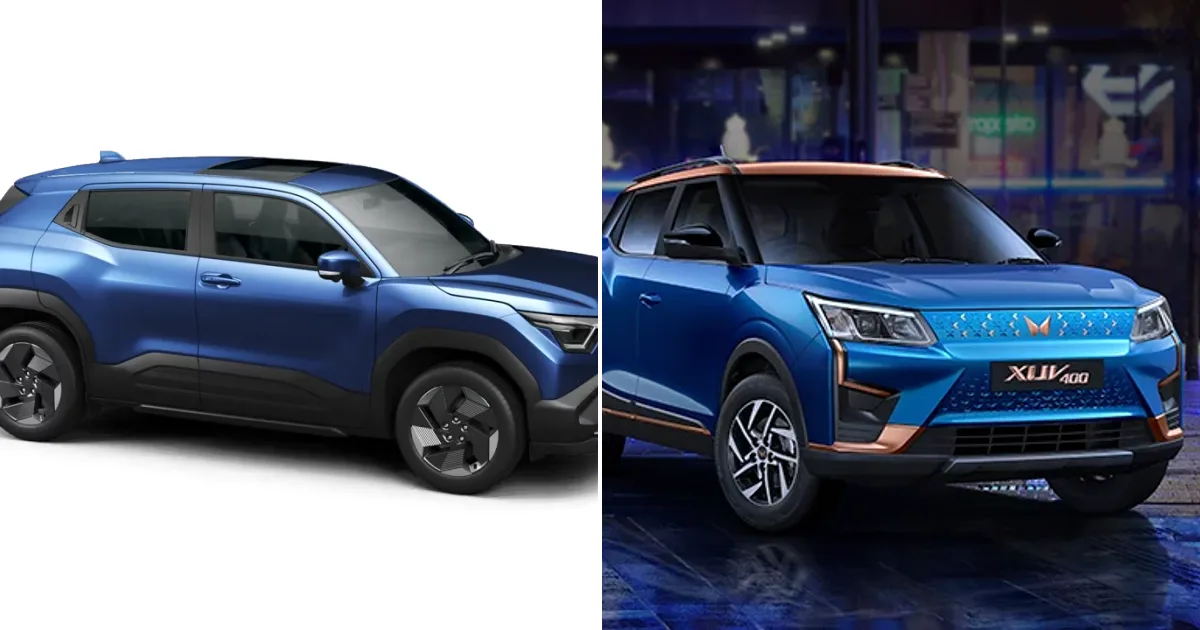
The Indian electric vehicle market is rapidly expanding, with SUVs leading the charge in popularity. Two significant contenders vying for consumer attention are the Maruti Suzuki e-Vitara and the Mahindra XUV400 EV. Both models represent their respective brands' commitment to electrification, offering distinct propositions within the burgeoning electric SUV segment.
Starting with **price positioning**, the Mahindra XUV400 EV enters the market with an ex-showroom price range spanning from ₹15,49,000 to ₹17,69,000. It is available across 5 variants, offering a good spread of options for buyers. In comparison, the Maruti Suzuki e-Vitara, while having a slightly higher entry point, covers a broader price spectrum, with ex-showroom prices ranging from ₹15,99,000 to ₹20,01,000. This model is offered in 4 variants. It's clear that while the XUV400 EV offers a more accessible top-end price, the e-Vitara extends into a higher premium bracket, potentially offering more features or a longer range at its peak. For the most current prices and full variant details, prospective buyers should always refer to DriveQ's dedicated model pages.
In terms of **body type and segment fit**, both vehicles are squarely positioned as SUVs. This aligns perfectly with the current market trend in India, where utility vehicles are highly sought after for their commanding road presence, practicality, and perceived safety. Their electric powertrains further enhance their appeal, offering a modern, eco-friendly alternative to traditional internal combustion engine SUVs.
Regarding **fuel and transmission options**, there's a clear commonality: both the Maruti Suzuki e-Vitara and the Mahindra XUV400 EV are purely electric vehicles, meaning they run solely on battery power. Consequently, both models are exclusively offered with an automatic transmission, a standard configuration for most electric cars, providing a smooth and effortless driving experience free from manual gear changes.
Delving into key specifications, the Maruti Suzuki e-Vitara is highlighted for its impressive potential range of up to 543 km, developed on the Suzuki BEV platform in collaboration with Toyota. This substantial range could be a significant draw for those with longer commutes or concerns about range anxiety. The Mahindra XUV400 EV, on the other hand, offers a commendable range of 456 km and boasts 150 kW DC fast charging capability, which can significantly reduce charging times and enhance convenience for users on the go.
**Which one for whom?**
For buyers prioritising maximum range and potentially a more premium offering at the top end of the spectrum, the **Maruti Suzuki e-Vitara** with its up to 543 km range and higher maximum price point could be the more appealing choice. Its development with Toyota also suggests a robust engineering foundation.
Conversely, for those seeking a strong value proposition with a slightly lower entry price and a focus on rapid charging capabilities, the **Mahindra XUV400 EV** presents a compelling package. Its 456 km range is still very practical for most urban and intercity travel, and the 150 kW DC fast charging is a significant advantage for quick top-ups.
Ultimately, both the Maruti Suzuki e-Vitara and the Mahindra XUV400 EV are strong contenders in the electric SUV segment, each bringing unique strengths to the table. Your final decision will likely hinge on your specific budget, range requirements, and preference for fast charging. We encourage you to visit DriveQ for comprehensive variant breakdowns, detailed specifications, and the latest pricing information to make an informed choice.
Comparison
Maruti Suzuki e-Vitara vs. Mahindra XUV400 EV: Electric SUV Showdown
DriveQ Editorial
Published 5 October 20263 min read
Comparing two prominent electric SUVs in the Indian market, the Maruti Suzuki e-Vitara and the Mahindra XUV400 EV. We delve into their price positioning, segment fit, powertrain options, and key specifications to help you decide.