Back to news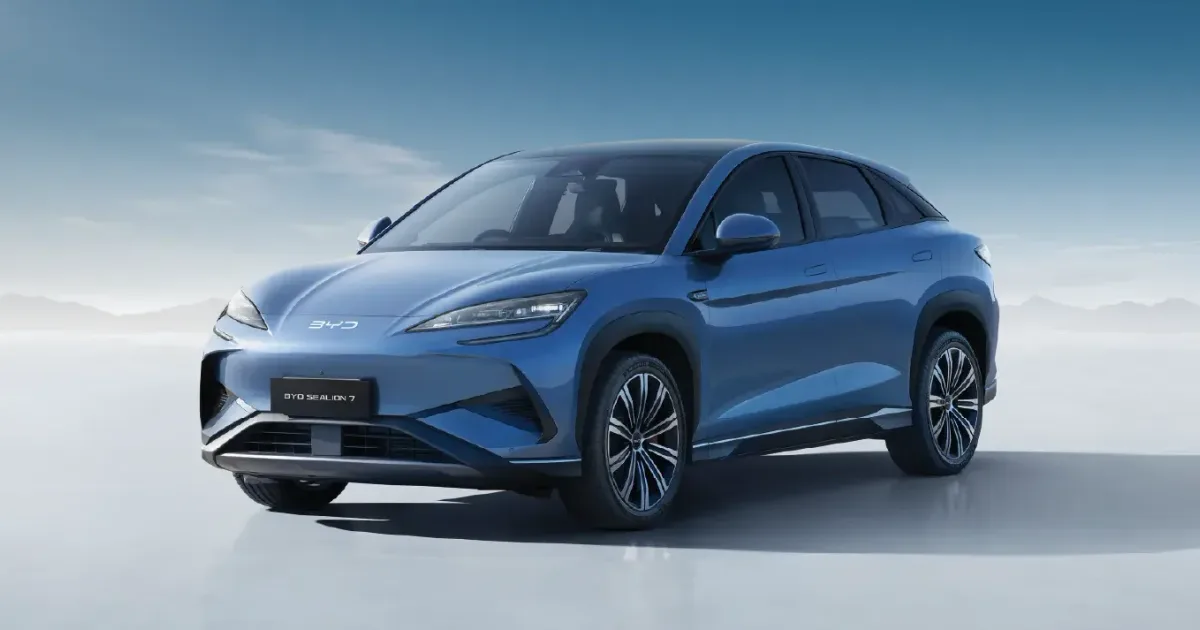
The Indian automotive market is witnessing a significant surge in premium electric vehicle offerings, and two notable contenders in the SUV segment are the BYD Sealion 7 and the Hyundai Ioniq 5. Both models represent compelling choices for buyers looking to embrace electric mobility with a touch of luxury and practicality. Let's delve into a detailed comparison of these two electric SUVs, drawing insights from their specifications available on DriveQ.
Starting with price positioning, the BYD Sealion 7 offers a broader entry point into the premium electric SUV space. Its ex-showroom price range begins at ₹49,90,000 and extends up to ₹55,90,000. This spread is across two distinct variants, providing buyers with some flexibility in features and budget. In contrast, the Hyundai Ioniq 5 is positioned at a singular, premium ex-showroom price of ₹55,70,600. This fixed pricing applies to its single available variant, suggesting a streamlined offering for its target audience. While the Sealion 7 provides a more accessible starting price, its top-end variant aligns very closely with the Ioniq 5's sole offering, indicating a direct overlap in the higher echelons of their respective ranges. For the most current prices and full variant details, prospective buyers can always refer to the dedicated model pages on DriveQ.
In terms of body type and segment fit, both the BYD Sealion 7 and the Hyundai Ioniq 5 are classified as SUVs. This places them in direct competition within the rapidly expanding premium electric SUV segment in India. Their SUV stature promises a commanding road presence, elevated seating positions, and practical cabin space, attributes highly valued by Indian consumers.
Moving to fuel and transmission options, both vehicles are pure electric offerings, signifying their commitment to zero-emission mobility. The BYD Sealion 7 comes exclusively with an Automatic transmission, a common and expected configuration for modern electric vehicles, ensuring a smooth and effortless driving experience. Interestingly, the Hyundai Ioniq 5, as per the available data, lists both Manual and Automatic transmission options. This is a unique characteristic for an electric vehicle and could potentially cater to a very specific segment of buyers, if indeed a manual option is offered in an EV.
Which one for whom?
The choice between the BYD Sealion 7 and the Hyundai Ioniq 5 ultimately depends on individual preferences and priorities.
The BYD Sealion 7, with its starting ex-showroom price of ₹49,90,000 and two variants, appears to be an attractive option for buyers seeking a premium electric SUV that offers a slightly lower entry barrier and more choices within its range. It caters to those who appreciate variant flexibility and a potentially broader feature set across its offerings.
On the other hand, the Hyundai Ioniq 5, with its single, well-defined variant priced at ₹55,70,600, might appeal to buyers who prefer a straightforward, premium package from a globally recognized brand. Its unique transmission options, as listed, could also be a deciding factor for a niche audience. Both models promise a compelling electric SUV experience, and a visit to DriveQ's model pages will provide all the necessary details to make an informed decision.
Comparison
BYD Sealion 7 vs Hyundai Ioniq 5: A Premium Electric SUV Showdown
DriveQ Editorial
Published 5 October 20263 min read
Comparing two prominent electric SUVs, the BYD Sealion 7 and Hyundai Ioniq 5, available on DriveQ. We delve into their price points, body types, and transmission options to help you decide.